
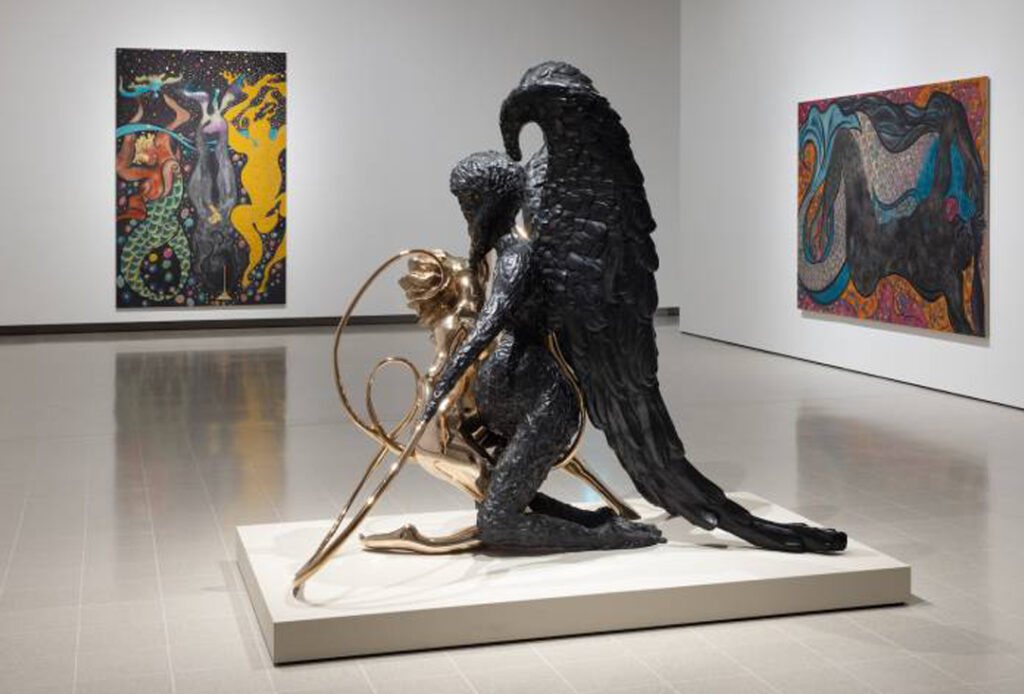
Writer and curator Ekow Eshun expands on his acclaimed exhibition, ‘In the Black Fantastic’, to reveal how Black creatives are rejecting Western colonial narratives of progress and modernity and instead drawing from African-originated myths, beliefs and knowledge to chart new ways of confronting racism and uplifting cultures of resistance and affirmation.
About
Speaker Ekow Eshun joins host Amy Kulper, with discussants Sara Shafiei, Edward Denison and Felicity Atekpe, as part of The Bartlett International Lectures Autumn 2022. This year, the International Lectures return to an in-person format, with lectures taking place at the school’s Bloomsbury campus, in the Christopher Ingold Auditorium, 22 Gordon Street, at 18:30 GMT on Wednesdays throughout the autumn and spring terms. Advance registration is not required unless specifically stated.
Abstract
Following his acclaimed exhibition ‘In the Black Fantastic’, at London’s Hayward Gallery, Ekow Eshun will explore the concept of the Black Fantastic. He will discuss how Black artists and creative figures are drawing inspiration from African-originated myths, beliefs, and knowledge systems to stand apart from Western narratives of progress and modernity premised on the historical subjugation of people of colour. Looking to movements and theories from Afrofuturism to pan-Africanism and post-colonialism he will examine how artists are drawing on the power of the fantastic to help chart new ways of confronting legacies of racism and celebrate cultures of resistance and affirmation.
Biography
Ekow Eshun is a writer and curator. He is Chairman of the Fourth Plinth Commissioning Group, overseeing the most prestigious public art programme in the UK, and the former Director of the Institute of Contemporary Arts, London. He is the author of In the Black Fantastic, Africa State of Mind, nominated for the Lucie Photo Book Prize, and Black Gold of the Sun, shortlisted for the Orwell Prize.
Described as a ‘cultural polymath’ by The Guardian he is the presenter of documentaries including the BBC film Dark Matter: A History of the Afrofuture. He has contributed to books on artists including Mark Bradford, Kehinde Wiley, Chris Ofili, John Akomfrah and Wangechi Mutu, and his writing has appeared in publications including the New York Times, Financial Times, The Guardian, The Observer, Esquire and Wired.
