
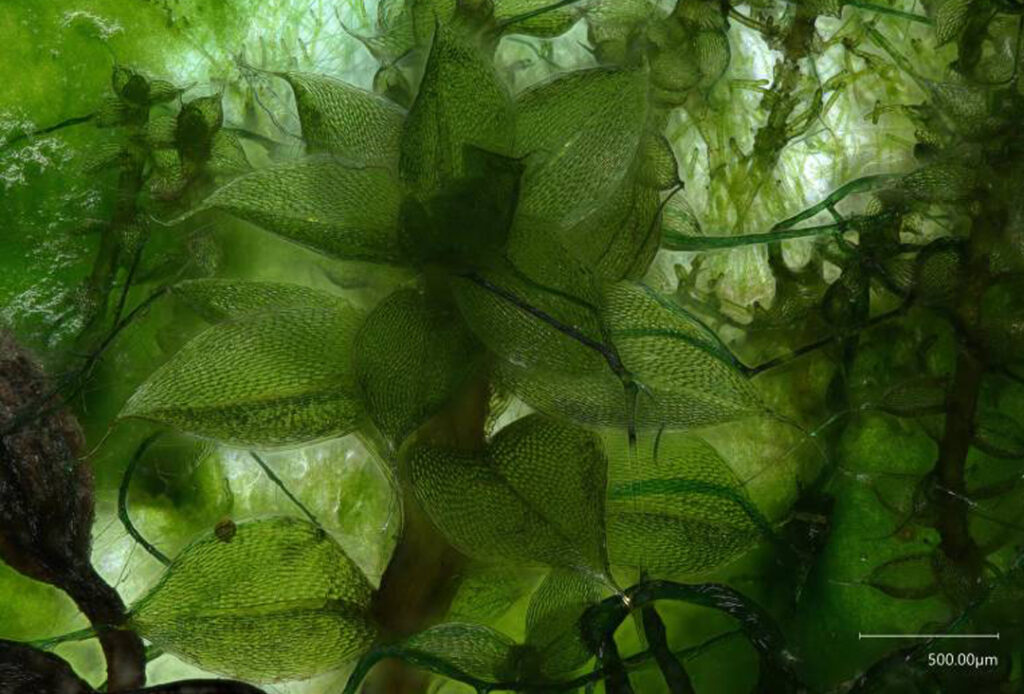
MPhil/PhD student Alexandra Lăcătușu discusses her research into the complex and highly dynamic interactions between mosses, their substrates, associated organisms and local environmental parameters, and the biocentric design that this knowledge generates.
Design with Bryophytes: Biotic Exchanges and Environmental Benefits of Moss Growth on Urban Bioreceptive Surfaces
Cities worldwide urgently need extensive, autonomous and fast-growing green areas to mitigate the effects of climate change. In a similar way to forests – just at a different scale – mosses capture atmospheric pollutants and maintain local biodiversity by providing shelter and food for a highly diverse set of organisms across all kingdoms of life. Early establishment and growth are influenced by a dynamic mix of biotic and abiotic factors, while environmental queues mediate physiological responses and modulate plant biochemical exchanges.
This research focuses on translating the complex and highly dynamic interactions between mosses, their substrates, associated organisms and local environmental parameters. Firstly, the aim is to augment human perception of small-scale natural systems and enhance the value designers assign to micro-scale landscapes. At the same time, the resulting data generates a starting point for the design of biocentric and bioreceptive micro-environments that can support moss growth on vertical building surfaces.
