
Bio:
Gordon Brent Brochu-Ingram is an environmental planner and landscape ecologist. He is Métis, an indigenous community across the middle latitudes of Canada, and grew up in a W̱SÁNEĆ (Salish) community on Vancouver Island. Along with the late Latina activist Yolanda Retter and Anne-Marie Bouthillette, Brent developed and edited the first survey of LGBT public space and urban design issues, Queers in Space: Communities, Public Places, Sites of Resistance (1997). Over two decades, Brent studied, conducted research, and taught at the University of California, Berkeley College of Environmental Design where he completed his doctorate. He has also taught at the universities of British Columbia and Victoria, and at George Mason University where he was an Associate Professor / Dean. Most of his work has been on indigenous legacies in landscapes and First Nations reasserting stewardship over public space, territories, cultural sites, and protected areas. Roughly a quarter of his work has focused on LGBT2S enjoyment of public space. As part of a small group, focused on the islands around the Salish Sea between Vancouver, Canada and Seattle, Washington, Brent combines monitoring cultural landscapes and local biological diversity, making and writing about site-based environmental art, and related planning and design theorizing. He is an appointee to the agricultural commission of the local, elected government. A recipient of a Lambda Literary Award, Brent has received support from the Graham Foundation, the Canada Council for the Arts, and the British Columbia and Yukon arts councils.
Abstract:
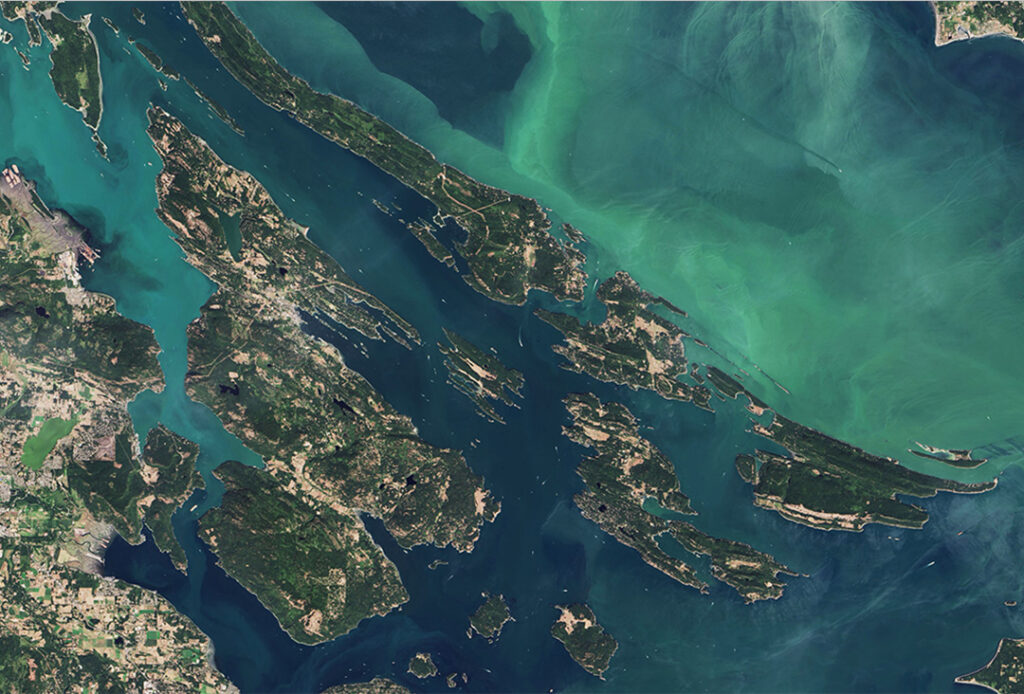
Biodiversity conservation and related habitat protection remains difficult, and only partially successful, including on the margins of large metropolitan areas in North America. Island ecosystems remain particularly vulnerable. Many of these same areas continue to be owned, claimed and partially stewarded by indigenous communities and their (First Nations) governments. Decolonization here has been incremental and halting with marked disparities between legal rights and operational realities. Much of residual neo-colonial practices are veiled in land use planning and the «disconnect»; with subsequent ecosystem management and landscape protection. More often, joint land use planning efforts, involving all levels of government including First Nations, can be later taken over by a government agency stakeholder (especially where public and foundation funding can be captured). First Nations continue to be under-consulted, even in areas with joint ownership, an array of local forms of resistance, re-engagement, reclaiming of territory, and alliance building are sometimes leading to higher levels of ecosystem conservation. This discussion centers on the Canadian side, the northern end, of the Salish Sea, a metropolitan area spanning the Puget Sound of Washington to mid-way up Vancouver Island with a human population of well over six million. The central example is the Hwmet’utsun conservation area on the west coast of Salt Spring Island with a range of contentious environmental and land use issues. Ranging from houseboats and related pollution, loss of predators and traditional burning, rich cultural sites going back at least 8,000 years, over fifty species-at-risk (listed, endangered species) and typical pressures on exurban open space. First Nations communities, in this relatively affluent region, remain poorly housed and served while representing a sufficiently large portion of the electorate are able to succeed through both the Supreme Court of Canada and in local politics — allowing certain governments to challenge and overwhelm the goals in conventional local planning.
