
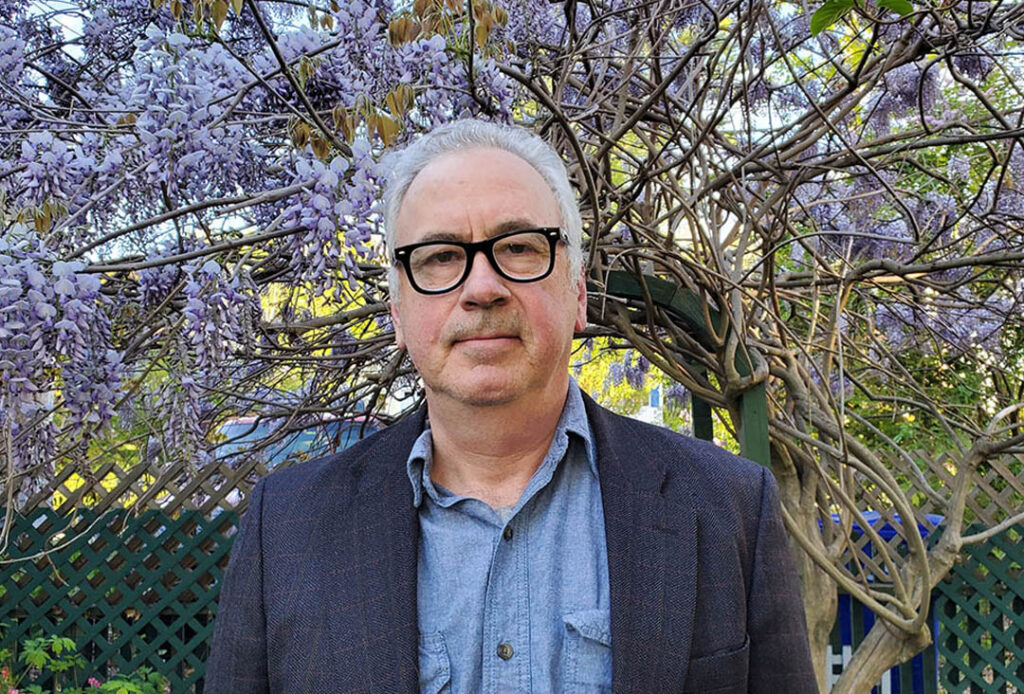
This year’s Frederick Law Olmsted Lecture, delivered by Ethan Carr, is also the keynote lecture for the conference Olmsted: Bicentennial Perspectives, October 14-15, 2022. On Friday, the conference will run from 10:00 AM – 7:00 PM; the Frederick Law Olmsted Lecture will take place from 5:30 – 7:00 PM that evening.
“Well, they have let it alone a good deal more than I thought they would!” Horace Greeley on his first visit to Central Park (according to Clarence Cook, 1869)
“We have let it alone more than most gardeners can. But never too much, hardly enough.” Frederick Law Olmsted to Calvert Vaux, 1887
Olmsted designed his most complete and innovative park system in Boston, including a “large park” that contained his most ambitious pastoral landscape. Often grouped with Central Park (1858) and Prospect Park (1865) as one of his three greatest urban parks, Boston’s Franklin Park (1885) cost less than a third as much to develop. But the desire to “let it alone” was more than a pecuniary impulse. Achieving more by doing less culminated an evolution in his design practice. The landscape of upland pastures and hanging woods persisted as an amplified version of what it had been: a characteristic passage of “rural” New England scenery. For Olmsted, letting it alone both preserved and transformed the landscape into an ideal setting for “receptive” recreations that improved individual wellbeing and built a sense of community in the modern city.
Ethan Carr, PhD, FASLA, is a Professor of Landscape Architecture and the Director of the Master of Landscape Architecture program at the University of Massachusetts, Amherst. He is a landscape historian and preservationist specializing in public landscapes. Three of his award-winning books, Wilderness by Design (University of Nebraska Press, 1998), Mission 66: Modernism and the National Park Dilemma (University of Massachusetts Press, 2007), and The Greatest Beach: A History of Cape Cod National Seashore (University of Georgia Press, 2019), describe the twentieth-century history of planning and design in the US national park system as a context for considering its future. Carr was the lead editor for The Early Boston Years, 1882-1890, Volume 8 of the Papers of Frederick Law Olmsted (2013). Carr co-wrote Olmsted and Yosemite: Civil War, Abolition, and the National Park Idea (Library Of American Landscape History, 2022) with Rolf Diamant, tracing the origins of the American park movement. His latest book, Boston’s Franklin Park: Olmsted, Recreation, and the Modern City (2023) reconsiders the history of this landmark urban park. Carr consults with landscape architecture firms that are developing plans and designs for historic landscapes.
